Here’s an ironic truth: In the time it takes to read this comprehensive guide about writing engaging blog posts, dozens of readers will have already clicked away from partially read articles. But for those committed to mastering the craft of digital storytelling, this deep dive into the psychology and mechanics of compelling content will be worth every minute.
The Modern Attention Economy: Understanding Our Challenge
In our hyperconnected world, attention has become the most precious commodity. Every day, millions of blog posts compete for a finite resource: human attention spans that have dwindled to mere seconds. The challenge isn’t just writing good content—it’s crafting content that can pierce through the noise and capture the increasingly elusive focus of our readers.
The Sobering Statistics
Consider this paradox: While more content is being produced than ever before—over 7.5 million blog posts daily—readers are spending less time engaging with each piece. Research shows that 43% of readers admit to skimming blog posts, while only 16% read word-for-word. This creates a fascinating challenge for content creators: How do we write for both the skimmers and the deep divers?
The Psychology Behind Engaging Content
Understanding the psychological principles that drive reader engagement is crucial for creating content that resonates. Let’s explore the cognitive mechanisms that determine whether a reader stays or strays.
The Cognitive Load Theory
Our brains are constantly working to conserve energy, making split-second decisions about what deserves our attention. This biological imperative means readers are subconsciously asking themselves three questions within the first few seconds of encountering your content:
- Is this relevant to my needs?
- Will the effort required to read this be worth the reward?
- Can I trust this source to deliver value?
The Dopamine Factor
Engaging content triggers dopamine releases in the brain through:
- Anticipation of valuable information
- Discovery of unexpected insights
- Recognition of patterns and solutions
- Achievement of learning goals
Crafting the Perfect Introduction: The Gateway to Engagement
The introduction is where the battle for attention is won or lost. Here’s how to make those crucial first moments count.
The AIDA Framework Reimagined
Traditional marketing uses the AIDA framework (Attention, Interest, Desire, Action). Let’s adapt this for modern blog writing:
Attention: The Pattern Interrupt
Begin with something unexpected that breaks the reader’s usual thought patterns. This could be:
- A counterintuitive statement
- A surprising statistic
- A provocative question
- A bold prediction
For example: “Everything you know about blog writing is about to become obsolete. Here’s why…”
Interest: The Personal Connection
Bridge the gap between the pattern interrupt and the reader’s personal experience. Make them feel seen and understood by:
- Acknowledging their challenges
- Validating their concerns
- Demonstrating empathy with their situation
Desire: The Value Proposition
Present a clear, compelling promise of what the reader will gain. This should be:
- Specific and tangible
- Realistic yet ambitious
- Immediately applicable
Action: The Momentum Builder
Create forward momentum that pulls readers into the main content by:
- Foreshadowing key insights
- Creating curiosity gaps
- Setting expectations for the journey ahead
The AIDA Framework Reimagined for Modern Blog Writing
The AIDA framework—Attention, Interest, Desire, Action—has been a cornerstone of marketing for decades. But in the fast-paced, content-saturated world of 2024, it’s time to reimagine this classic model for modern blog writing. Let’s break it down step by step, like a teacher explaining a complex concept, and explore how you can apply it to create blog posts that captivate, engage, and convert.
1. Attention: The Pattern Interrupt – Have you noticed?
What is a Pattern Interrupt?
A pattern interrupt is a technique used to break someone’s habitual thought process or behavior. In blog writing, it’s about grabbing your reader’s attention with something unexpected. Think of it as a mental “speed bump” that forces them to stop and pay attention.
Why It Works
Our brains are wired to notice things that stand out. When you interrupt a reader’s usual scrolling pattern, you create a moment of curiosity that compels them to keep reading.
How to Execute It
Here are four ways to create a pattern interrupt in your blog post:
- A Counterintuitive Statement
Challenge common beliefs or assumptions. For example:
- “Forget everything you’ve been told about SEO. The real secret to ranking on Google has nothing to do with keywords.”
- A Surprising Statistic
Use data to shock or intrigue your readers. For example:
- “Did you know that 80% of readers never make it past the headline? If your introduction doesn’t hook them, you’ve already lost.”
- A Provocative Question
Ask a question that makes readers stop and think. For example:
- “What if I told you that the best way to grow your blog isn’t by writing more, but by writing less?”
- A Bold Prediction
Make a statement about the future that sparks curiosity. For example:
- “By 2025, AI will write 90% of blog posts. Here’s how to make sure yours still stands out.”
Real-World Example
Neil Patel often uses pattern interrupts in his blog posts. For instance, in a post about content marketing, he opens with:
- “Most content marketers fail. Here’s why—and how to avoid becoming one of them.”
This immediately grabs attention and sets the stage for the rest of the post.
2. Interest: The Personal Connection
What is the Personal Connection?
Once you’ve grabbed your reader’s attention, the next step is to build a bridge between your pattern interrupt and their personal experience. This is where you make them feel seen, understood, and valued.
Why It Works
People are naturally drawn to content that speaks directly to their needs, challenges, and desires. By acknowledging their pain points, you create an emotional connection that keeps them engaged.
How to Execute It
Here are three ways to build a personal connection:
- Acknowledge Their Challenges
Show that you understand their struggles. For example:
- “If you’ve ever spent hours writing a blog post only to see it flop, you’re not alone. Many bloggers face the same frustration.”
- Validate Their Concerns
Let them know their feelings are valid. For example:
- “It’s normal to feel overwhelmed by the sheer amount of content out there. But here’s the good news: You don’t need to compete with everyone—just the right people.”
- Demonstrate Empathy
Show that you’ve been in their shoes. For example:
- “I used to struggle with the same problem. But once I discovered these strategies, everything changed.”
Real-World Example
Ann Handley, in her book Everybody Writes, often uses personal anecdotes to connect with her readers. For instance, she shares stories of her own writing struggles, making her advice feel relatable and authentic.
3. Desire: The Value Proposition
What is the Value Proposition?
The value proposition is your promise to the reader. It’s what they’ll gain by reading your post. This could be knowledge, a solution to a problem, or a new perspective.
Why It Works
A strong value proposition taps into the reader’s desires and motivations. It gives them a reason to keep reading and a sense of what they’ll achieve by doing so.
How to Execute It
Here’s how to craft a compelling value proposition:
- Be Specific and Tangible
Avoid vague promises. Instead, be clear about what the reader will gain. For example:
- “By the end of this post, you’ll have a step-by-step blueprint for crafting blog posts that not only rank on Google but also resonate with your audience.”
- Make It Realistic Yet Ambitious
Your promise should be achievable but still exciting. For example:
- “You won’t become an overnight blogging sensation, but you will learn the strategies that have helped me grow my blog traffic by 300% in six months.”
- Ensure It’s Immediately Applicable
Readers want actionable advice they can use right away. For example:
- “These techniques are so simple, you can start implementing them in your next blog post.”
Real-World Example
Brian Dean of Backlinko is a master of value propositions. In his post on the Skyscraper Technique, he promises:
- “This technique helped me increase my search traffic by 110% in just 14 days. Here’s how you can do the same.”
This creates a strong desire to keep reading.
4. Action: The Momentum Builder
What is the Momentum Builder?
The momentum builder is your way of pulling readers into the main content. It’s about creating curiosity and excitement for what’s to come.
Why It Works
By foreshadowing key insights and creating curiosity gaps, you keep readers engaged and eager to learn more.
How to Execute It
Here are three ways to build momentum:
- Foreshadow Key Insights
Tease the main points of your post. For example:
- “In the next section, I’ll reveal the three mistakes most bloggers make—and how to avoid them.”
- Create Curiosity Gaps
Pose questions that will be answered later. For example:
- “What’s the one thing all high-converting blog posts have in common? Keep reading to find out.”
- Set Expectations for the Journey Ahead
Give readers a roadmap of what’s to come. For example:
- “We’ll start by exploring the psychology of great introductions, then dive into actionable strategies, and finally, wrap up with tips for crafting powerful conclusions.”
Real-World Example
Joe Pulizzi often uses momentum builders in his blog posts. For instance, in a post about content marketing, he writes:
- “In the next section, I’ll share the exact framework I used to build a $10 million content business. But first, let’s talk about why most content strategies fail.”
This keeps readers hooked and eager to continue.
The Architecture of Engaging Body Content
Now that we’ve covered the AIDA framework, let’s dive into the architecture of engaging body content. This is where you deliver on the promises made in your introduction and keep readers hooked from start to finish.
1. The Psychological Flow State
The flow state is a mental state where readers are fully immersed in your content. To achieve this, your content must be:
- Clear and Easy to Follow: Use simple language and avoid jargon.
- Engaging and Interactive: Incorporate questions, polls, or interactive elements.
- Relevant and Valuable: Ensure every sentence adds value.
2. Advanced Storytelling Techniques
Storytelling is one of the most powerful tools in a blogger’s arsenal. Here’s how to use it effectively:
- The Hero’s Journey: Frame your content as a journey where the reader is the hero. For example:
- “You started with a problem, but by the end of this post, you’ll have the tools to overcome it.”
- Emotional Appeal: Tap into emotions like fear, hope, or excitement. For example:
- “Imagine the feeling of seeing your blog post go viral. That’s what’s possible when you follow these steps.”
3. Data Visualization and Content Enhancement
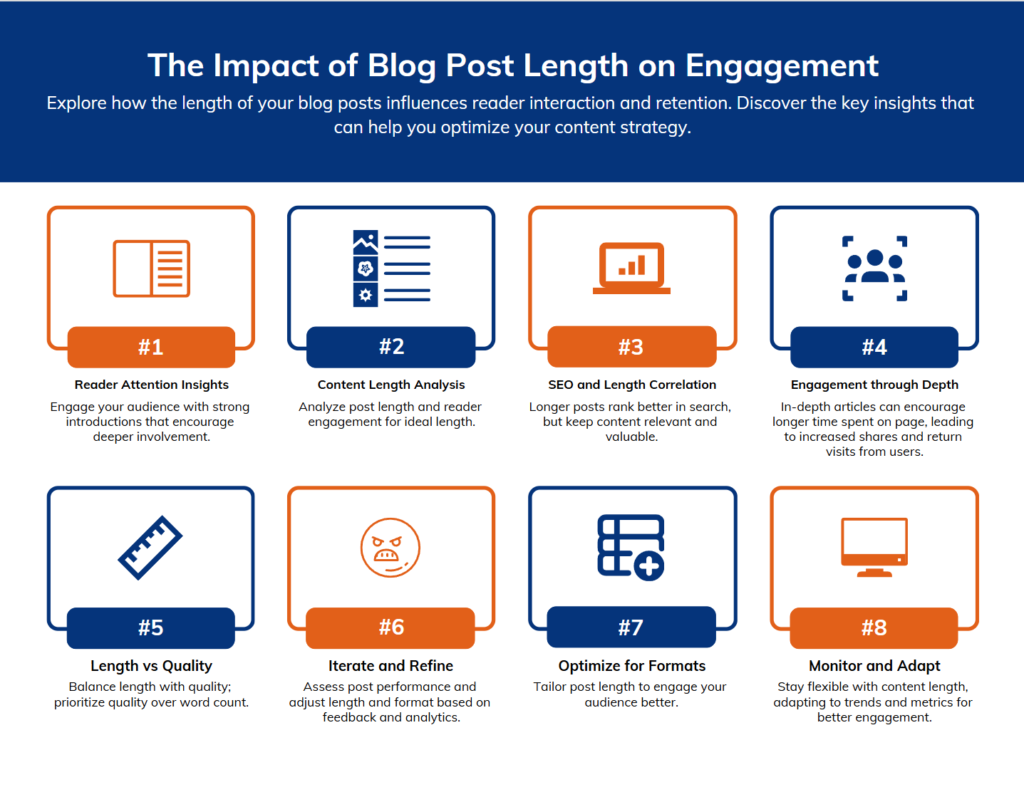
Visuals like charts, graphs, and infographics make your content more engaging and easier to understand. For example:
- “Here’s a breakdown of how blog post length affects engagement:
4. The Art of Transitions
Transitions are the glue that holds your content together. Use phrases like:
- “Now that we’ve covered X, let’s move on to Y.”
Mastering the Conclusion
The conclusion is your final opportunity to leave a lasting impression. Here’s how to do it right:
1. The Psychology of Memorable Endings
End with a thought-provoking question or statement that keeps readers thinking. For example:
- “What’s one thing you can do today to make your blog posts more engaging?”
2. Call-to-Action Optimization
Your CTA should be clear and compelling. For example:
- “Ready to take your blog to the next level? Start by implementing these strategies today.”
3. The Echo Effect
Reinforce your key points to ensure they stick. For example:
- “Remember, a great blog post starts with a captivating introduction, delivers value in the body, and ends with a powerful conclusion.”
Advanced SEO and Distribution Strategies
Finally, let’s talk about SEO and distribution. Even the best content won’t perform if no one sees it.
1. Understanding Search Intent Patterns
Align your content with what users are searching for. For example:
- If someone searches for “how to write a blog post,” they’re likely looking for a step-by-step guide.
2. Content Distribution Mathematics
Use data to optimize your distribution strategy. For example:
- Focus on platforms where your audience spends the most time.
3. Viral Coefficients and Content Spread
Encourage sharing by making your content highly shareable. For example:
Include social sharing buttons and create content that sparks conversation.
The Architecture of Engaging Body Content: The Science of Captivating Readers
Picture your mind as a river. Sometimes it flows smoothly, carrying thoughts effortlessly downstream. Other times it encounters obstacles, creating turbulence that disrupts the journey. This metaphor perfectly captures the essence of what we’re about to explore: how to create content that guides readers into a state of effortless engagement, where time seems to disappear and understanding flows naturally.
The Psychological Flow State: Understanding the Reader’s Mind
The Science Behind Flow
Mihaly Csikszentmihalyi, the psychologist who first identified the flow state, described it as a condition of complete immersion and focus. When applied to reading, this state occurs when readers are so engaged that they lose track of time and their surroundings. Think about the last time you were so absorbed in a book that you missed your subway stop – that’s the flow state we aim to create.
Creating Conditions for Flow in Written Content
To understand how to create flow in writing, we must first understand its prerequisites:
The Challenge-Skill Balance: Content must be complex enough to maintain interest but not so difficult that it overwhelms. Consider how a video game progressively increases in difficulty – your content should follow a similar principle of graduated complexity.
For example, when explaining a complex topic like artificial intelligence, you might structure your progression like this:
First Level: “Artificial intelligence is like teaching a computer to make decisions.”
Second Level: “These decisions are based on patterns the computer learns from data.”
Third Level: “The computer uses mathematical models called neural networks to identify these patterns.”
Fourth Level: “These neural networks are inspired by how human brain cells communicate.”
Clear Goals and Immediate Feedback: Each section of your content should have a clear purpose, and readers should feel they’re making progress. This creates a sense of achievement that maintains engagement.
The Flow Architecture Framework
To consistently create flow-inducing content, consider these structural elements:
Cognitive Stepping Stones: Place “mini-conclusions” throughout your text. These serve as rest points where readers can consolidate their understanding before moving forward. For instance:
“Now that we understand how neural networks process information, let’s explore why this matters for everyday applications.”
Progressive Disclosure: Reveal information in layers, each building upon the last. Think of it as slowly zooming out from a close-up photo to reveal the bigger picture.
Rhythm and Pacing: Alternate between complex ideas and simpler explanations. This creates a natural rhythm that prevents cognitive fatigue.
Advanced Storytelling Techniques: The Art of Narrative Flow
The Hero’s Journey in Blog Writing
Even technical or educational content can benefit from storytelling structures. Consider how the classic hero’s journey can be adapted for blog writing:
The Call to Adventure (Introduction): Present a problem or challenge that resonates with readers.
“Every content creator faces a moment when they realize traditional writing advice isn’t enough.”
The Mentor (Your Expertise): Position your insights as the guide that will help readers overcome their challenges.
“After analyzing thousands of high-performing articles, we’ve discovered patterns that consistently create engagement.”
The Journey (Main Content): Present your solutions as a series of discoveries or revelations.
“The first breakthrough came when we noticed successful writers weren’t just sharing information – they were creating experiences.”
The Return (Conclusion): Show how readers can apply their new knowledge to transform their own work.
“Armed with these insights, you’re ready to transform your content from mere information into engaging experiences.”
Advanced Narrative Techniques
Nested Loops: Start several story threads and resolve them in reverse order. This creates multiple open loops that keep readers engaged until resolution. For example:
Open Loop 1: “The most successful blog post I ever wrote began with a failure…”
Open Loop 2: “This failure taught me three crucial lessons…”
Open Loop 3: “The first lesson changed everything I thought I knew about writing…”
[Resolve Loop 3]
[Resolve Loop 2]
[Resolve Loop 1]
Pattern Breaks: Intentionally disrupt expected patterns to maintain attention. Just as music uses unexpected chord progressions to maintain interest, your writing can use pattern breaks to keep readers engaged:
Pattern: “First, we’ll examine X. Then, we’ll explore Y. Finally…”
Pattern Break: “But here’s where everything you think you know about Z gets turned upside down…”
The Architecture of Engagement
Creating engaging body content is like designing a building where every room leads naturally to the next, each space serves a purpose, and the overall experience creates a sense of journey and discovery. Here’s how to achieve this:
Structural Integrity: Every paragraph should serve one of three purposes:
- Building understanding (providing new information)
- Creating connections (linking concepts)
- Facilitating reflection (allowing processing time)
Flow Dynamics: Use varying sentence lengths and structures to create rhythm. Short sentences create punch. Longer sentences, with their more complex structures and carefully placed clauses, can carry readers through more nuanced ideas, creating a sense of momentum that pulls them forward.
Transitional Elements: Create smooth transitions between ideas using:
Conceptual Bridges: “This principle of progressive complexity doesn’t just apply to writing – it’s also crucial in…”
Question Bridges: “But what happens when we apply these concepts to real-world situations?”
Preview Bridges: “Understanding this foundation will be crucial when we explore…”
The Psychology of Information Processing
To maintain engagement throughout your content, consider how the human brain processes information:
Chunking: Group related ideas into digestible sections. The brain naturally looks for patterns and relationships, so help it by creating clear categorical distinctions.
Cognitive Rest Points: Insert brief summaries or reflection prompts after complex sections. These act as mental breathing spaces where readers can consolidate their understanding.
Progressive Complexity: Layer information like a pyramid, with each level building on the previous one. Start with foundational concepts and gradually introduce more complex ideas.
Creating Memorable Content
For content to be truly engaging, it must also be memorable. Here’s how to achieve this:
Concrete Examples: Transform abstract concepts into tangible illustrations. Instead of just explaining a principle, show how it works in real life.
Emotional Anchors: Connect information to emotional experiences or relatable situations. The brain remembers emotional connections better than raw facts.
Pattern Recognition: Help readers identify recurring themes and principles. The brain is naturally drawn to patterns, and recognizing them creates satisfaction and aids memory retention.
The Future of Content Architecture
As we move further into the digital age, the principles of engaging content continue to evolve. Yet the fundamental truth remains: human psychology drives engagement. Understanding and working with these psychological principles – rather than against them – is the key to creating content that not only captures attention but maintains it throughout the reader’s journey.
Remember, the goal isn’t just to keep readers on the page – it’s to create an experience that transforms them, leaving them better informed and equipped than when they started. When we achieve this, we’ve created something truly valuable: content that serves both our readers and our purpose as content creators.